

AfriKids works alongside parents, teachers, community leaders and local authorities to keep children safe, in school and learning. In part two of our series on the learning crisis, David Pwalua, Country Director of AfriKids Ghana, explores the power of community-led initiatives in keeping the door to education open for every child.
Not read part one yet? Click to read why millions of children are being left behind.
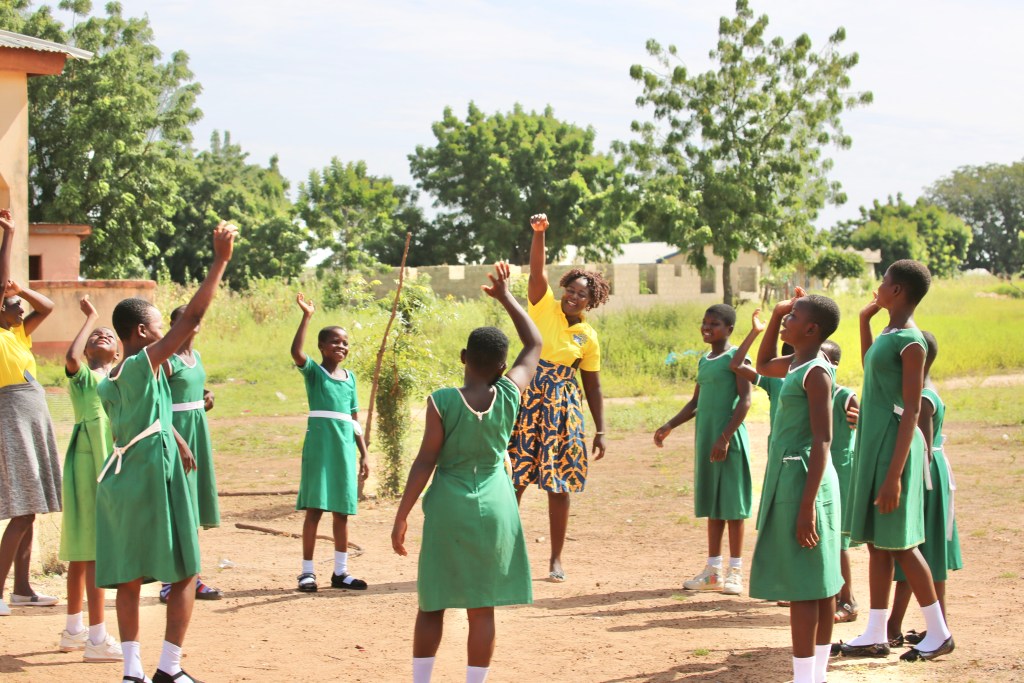
AfriKids takes a holistic, community-led approach to education. Can you share what that looks like in practice?

Our education interventions are designed to improve learning outcomes for all children.
To achieve this ambitious goal, we’ve adopted an integrated and indigenised approach to change which we’ve called the Means, Motive, and Opportunity model.
Under the Means pathway, we implement livelihood empowerment schemes for mothers, such as supporting them to set up their own small businesses, to enable them to meet the basic needs of their children and keep them in school.
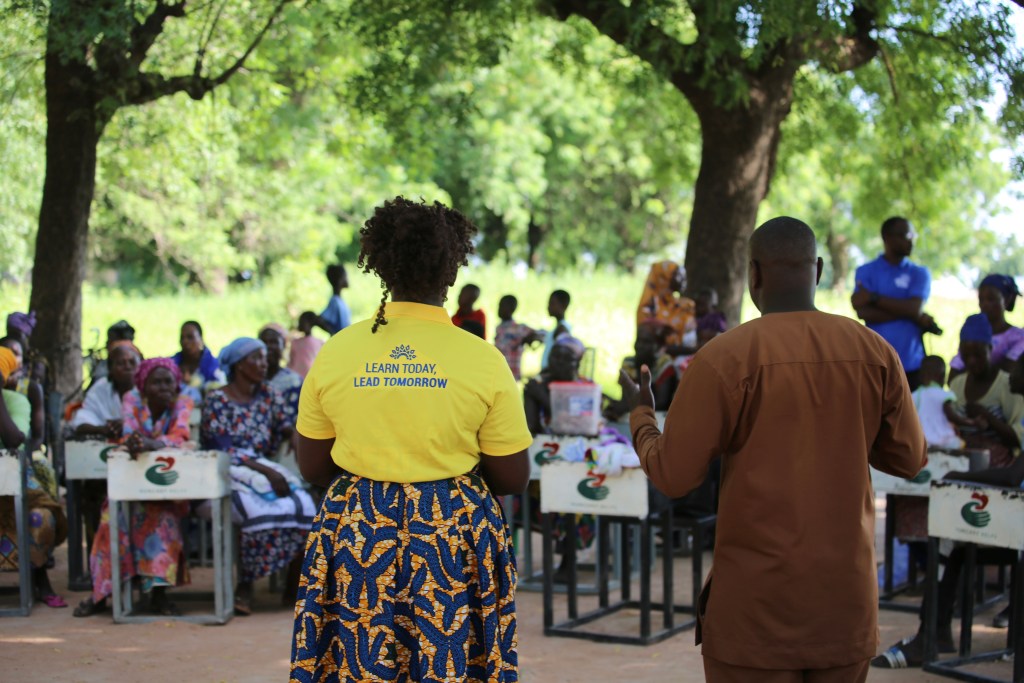
Through the Motive pathway, we work to shift parental mindsets toward valuing and prioritising education. This involves our teams going into rural towns and villages and running public awareness campaigns on the importance of keeping their child in school.
Finally, under the Opportunity pathway, we collaborate with relevant government agencies at the local level to ensure they fulfill their responsibilities. This includes organising training workshops, facilitating exchange visits, setting up and running various school-based clubs, convening community dialogue sessions, and conducting routine monitoring of schools.
You’ve talked before about breaking the cycle of poverty through education. How does AfriKids ensure that no child is left behind, especially girls and children in rural areas?
AfriKids’ work is truly community-led. First, we ensure that the majority of our field team members are individuals who understand the local context, they speak the local dialects and have a strong grasp of the community’s socio-cultural practices.
Second, we implement our interventions through existing community structures, including traditional authorities, community-based systems such as our Community Child Protection Champions (volunteers), and formal service providers like schools and health facilities.
Our interventions are non-discriminatory, with inclusion serving as a cross-cutting theme across all our work. This comprehensive approach ensures that no child is left behind, and that all children regardless of their background, status, or tribe are reached and actively participate in our activities.
We live in a tech-driven world where many of today’s youth have unlimited access to the internet and new technologies. How are you introducing technology in rural classrooms and what impact are you seeing so far?
The Ghanaian education system emphasizes the integration of technology into teaching and learning from the early years. However, implementing this aspect of the curriculum has been challenging due to a lack of basic infrastructure and limited access to IT tools.
To help address these gaps, AfriKids, in collaboration with partner organizations, is introducing children to the use of computers. As part of this initiative, tablet devices preloaded with literacy and numeracy exercises are provided for use during IT lessons. These exercises are designed to enhance children’s skills in literacy, numeracy, and digital manipulation.
This intervention is community-driven. Local parents contribute by providing security for the devices at school, covering electricity costs, and paying a monthly allowance to the community volunteer who facilitates the sessions.
How important are partnerships with parents, community leaders, and local authorities in achieving sustainable education outcomes?

The challenges affecting the education in Ghana are complex, dynamic, and diverse.
We work in close partnership with teachers, community leaders, parents, and the children themselves. These individuals and groups actively participate in the design of our interventions, play critical roles when it’s rolled out, and are involved in jointly monitoring and evaluating outcomes, as well as documenting lessons learned. We find that this collaborative, community-led approach is the foundation of our success in achieving sustainable education outcomes.
What gives you hope for the future of Ghana’s children? And what can supporters around the world do to help?
Although Ghanaian children are currently facing severe challenges stemming from a struggling economy, conflict, and the impacts of climate change, there’s still hope that they can achieve fulfilling futures. Ghanaian children are naturally resilient, and with even minimal support from parents, teachers, and other key stakeholders, they’re capable of thriving.
Throughout my work, I’ve encountered many children who have defied the odds and excelled in life. For example, Rebecca, Diana, and Ramatu are three girls who experienced serious cases of sexual abuse, including defilement. They were rescued through the efforts of AfriKids working in collaboration with the police and healthcare workers. With consistent support, these girls have not only overcome their traumatic experiences but have gone on to achieve excellent academic performance and successfully transitioned into higher education.
It’s stories like theirs and many others I have witnessed that give me confidence in the potential of today’s children. They’re brighter, more determined, and more resilient than ever. With these qualities, I remain hopeful that their future is a bright one.
Thank you for reading about how community-led initiatives are helping break down barriers to education. Did you read part one of our interview series? You can check it out here: The Learning Crisis we can’t afford to ignore: Why millions of children are being left behind.
Leave a Reply