
CHANGE STARTS HERE
We help communities overcome the barriers keeping their children out of school.

What we do
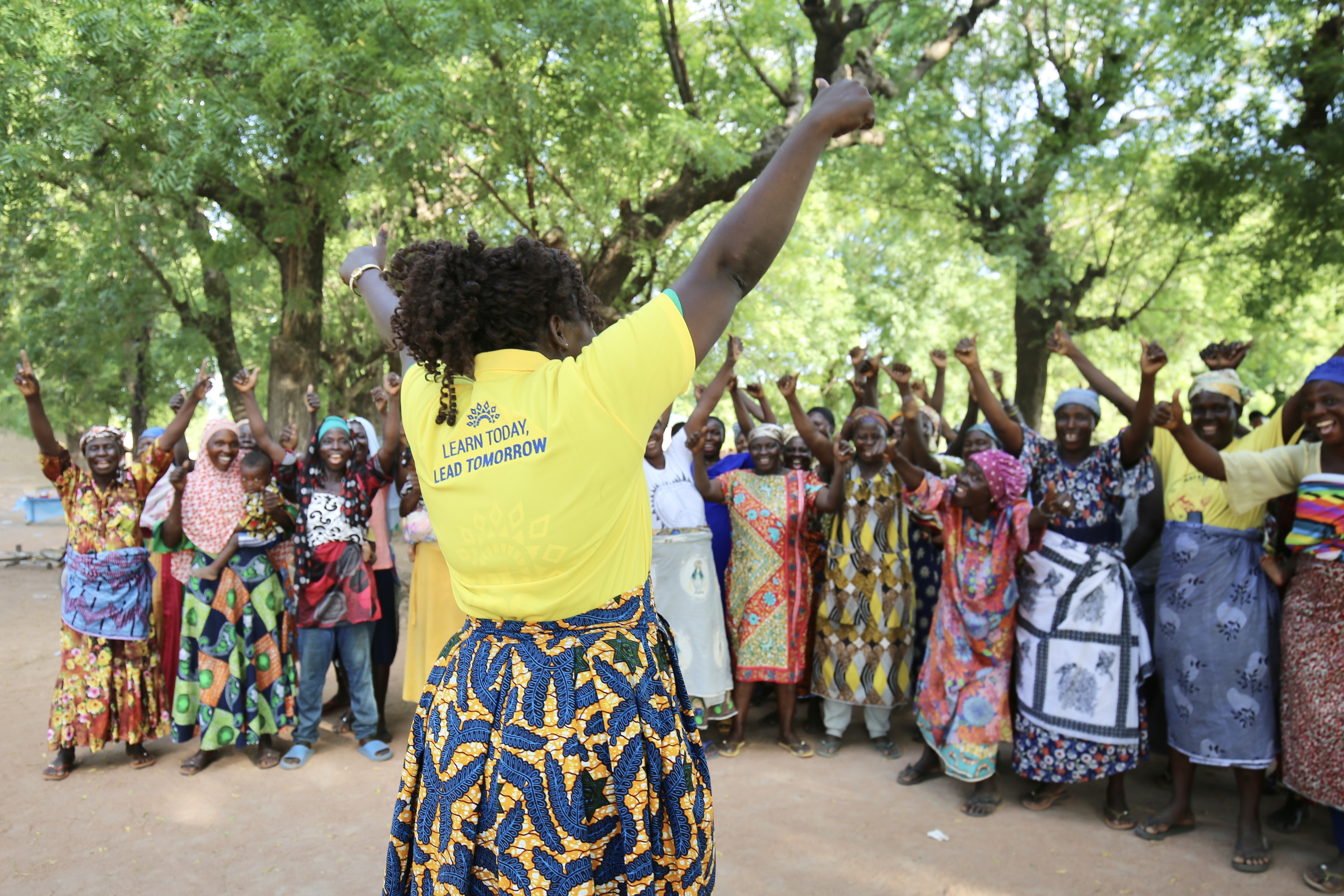
We listen to communities to understand why their children are not completing school and support them to change this. Our approach is simple, and it works: we listen to local people, and empower them to drive sustainable changes themselves.
Once we understand the specific challenges a community is facing, as well as their strengths and what is working well, we work with them to co-design and deliver a programme of tried and tested activities that will help overcome barriers and secure the means, motive and opportunity to ensure every one of their children completes a quality basic education.
Why our work is needed
It is estimated that by 2050, 40% of the world’s children will be African and right now, nearly 9 in 10 children in Sub Saharan Africa are not learning. Ensuring education for Africa’s children – equipping them to break the cycle of poverty and help tackle global issues like climate change, social inequality and conflict – is now not only the right thing to do, but critical to the future of humanity.
READ MORE 
Children being failed their education ultimately translates into lower productivity and earnings when they enter the workforce. Without action, the current generation of students worldwide now risks losing $21 trillion in lifetime earnings in present value ($11 trillion of which borne by students in low- and middle-income countries), or the equivalent of 17 percent of today’s global GDP. This equates, on average, to each of these children losing $975 in income every year in the future – with significantly higher impact in countries where average incomes are already low. Failing to ensure children learn not only impacts their future earnings, but their potential as the leaders of tomorrow to reduce inequality, address global challenges, and build a future where all people and planet can thrive.
The profiles of children not learning and the reasons why vary according to local circumstances, though there are broad trends. Outside of conflict-affected areas, poverty, rurality, disability and gender inequality are common factors among children who are out of school or do not complete basic education, and barriers exist in both the demand and supply of quality education.
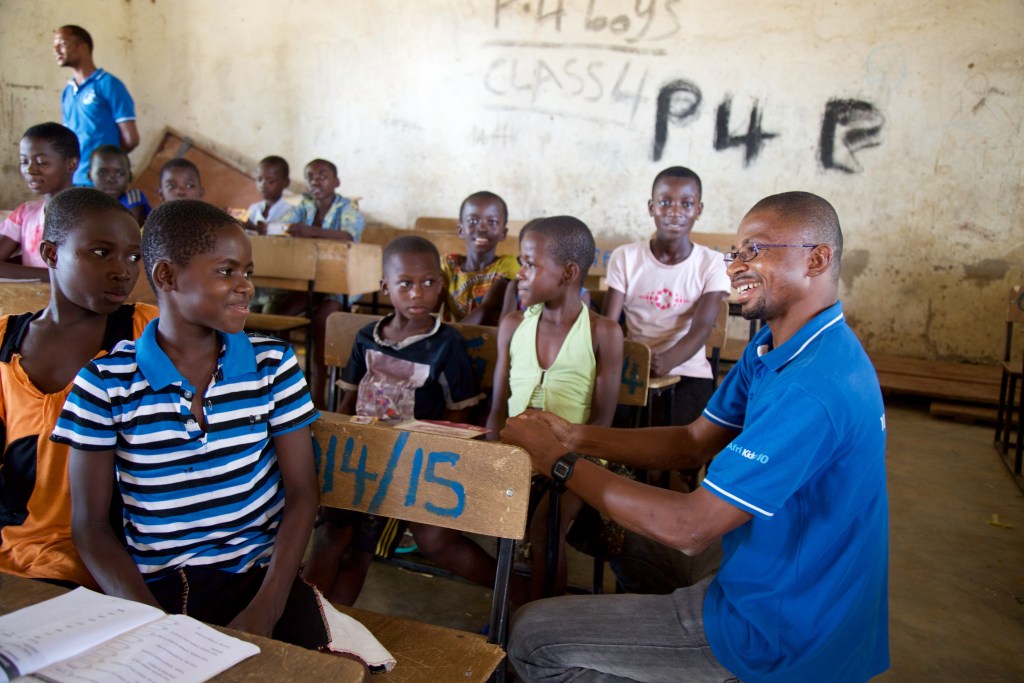
AfriKids works in rural African communities with high rates of poverty, where key development indicators like life expectancy, literacy and formal employment are low. In these communities, barriers to children learning usually include a lack of means, motive and opportunity:
- Means. For families facing extreme financial hardship, the cost of school uniforms and supplies may be prohibitive, or simply the opportunity cost of a child going to school instead of working to support the family’s income is too high.
- Motive. In communities that have lived for generations with poverty, being denied education – especially for certain groups of children like those with disabilities – can be very common. Children working, marrying and experiencing abuse may be widespread and socially normalised, while the case for investing in the longer-term benefits of education not widely appreciated, witnessed or promoted by figures of authority and influence.
- Opportunity. Schools and education services in poorer and more rural communities with lower political influence are often under-resourced and inadequate. Classes are overcrowded, water and sanitation facilities are poor and trained teachers and teaching materials are in short supply. This poor quality of education is reflected in students’ results. Children living with disabilities face even more challenges and girls often drop out when they reach adolescence.
These causal factors result in key issues like children not attending school at the right age (often missing out on critical early years education), not regularly attending, and not receiving a quality education when they do – all ultimately resulting in children not learning. These factors are complex, interwoven and require holistic interventions that recognise and address this, working closely with local stakeholders to be locally-owned, effective and sustainable.
It is important to note that children not going to school is not simply the “fault” of parents and caregivers. Many of the hardships children face stem from underlying issues such as deeply ingrained power imbalances or ideologies that manifest through harmful practices and discriminatory institutions. In such circumstances, safeguarding children’s rights necessitates a transformation of the structures that determine how power is distributed within societies.
This is why AfriKids’ programmes help to shift this power; mobilising communities through increased knowledge, skills and opportunity to make deep and lasting change happen for children now and for generations to come.
Our work involves

Running life-changing projects

Raising vital funds

Research and data collection

Advocacy – sharing what we learn and mobilising others
Where we work
AfriKids works in Ghana, West Africa. It is here that our story began – with a handful of local heroes working to support vulnerable children in their communities. Their work inspired our simple but effective approach: listen to local people and empower them to make sustainable changes themselves. This is still our philosophy today.
READ MORE
We are deliberately focused on Ghana’s northern regions, where a significant majority of the country’s poorest people live and child rights are especially at risk. Since 2002, we have been dedicated to working in these regions to make a difference, for as long as we are needed. Our award-winning projects are designed and delivered by Ghanaians, and most of us are from the north, so have deep understanding and personal commitment to improving life for children here, and are known and trusted by the communities we work in.
The specific communities we work with are carefully selected using first-hand and independent data to determine where the need is greatest and we can make the biggest difference.
With more than two decades of experience under our belts, we have now proven the power of our locally-led model and are ready to take it to scale. Over the next few years, we aim to expand our programmes into many more communities and share the story of our impact to influence and mobilise others to replicate what works.
Quality and standards
We are registered as a non-governmental organisation with the Department for Social Welfare in Ghana (DSW/3024) and are members of many other networks and bodies that help regulate and govern good practice in our sector including Keeping Children Safe and the Northern Network for Development.
Our sister organisation, AfriKids UK, which helps to raise funds for our work is independently registered with the Charity Commission for England and Wales (1141028) and the Fundraising Regulator.
We are committed to excellence in everything we do, and adhering to the highest standards of ethics and good practice is enshrined our organisation values.