

Today marks the end of the second week of school after the summer holidays. For many children in our communities, returning to school is not a given. The harvest season is in full swing, and countless children are kept at home to assist with farming tasks. Often, parents underestimate the importance of prompt school attendance, believing that not much happens in those early days of term.
But learning begins immediately!
Our ‘Back to School Campaign’
Over the past few weeks, our dedicated AfriKids team, in collaboration with the AfriKids Community Champions and the Ghana Education Service, has been hard at work with our ‘Back to School Campaign.’ This initiative aims to remind families that school is back in session and emphasises the critical importance of education.
Throughout the campaign, we employed various strategies to engage the community, including roadshows, radio discussions, and face-to-face engagements across three districts. Notably, we reached out to families at the Loagri Market in the Mamprugu-Moagduri district, where many community members are farmers, construction workers, and traders. Many families face literacy challenges and lack access to information about school dates, making our campaign essential for ensuring that children return to school.

Addressing the Challenges
Despite our efforts, we face significant hurdles. Our project staff estimate that an average of 53% of children will miss school due to agricultural labour during the first term.
The challenges don’t stop there. Many parents in our target areas are unaware of the school reopening dates, with a significant number lacking this critical information. This gap often leads to delays in sending children back to school, with many waiting to see other students in uniforms before taking action.
From our interactions, it’s clear that prioritising farming and economic activities over education remains a significant barrier. For some families, older children travel to larger cities for work during breaks, which exacerbates the issue. The result is that it can take 2 to 3 weeks for all children to return to school fully, highlighting the need for continuous community engagement and information dissemination.
As well as this, on average 1 in 3 teachers were absent on the first day of term across our target schools. This disruption underscores the necessity for our ongoing campaigns and community support efforts.
Promoting Girls’ Education
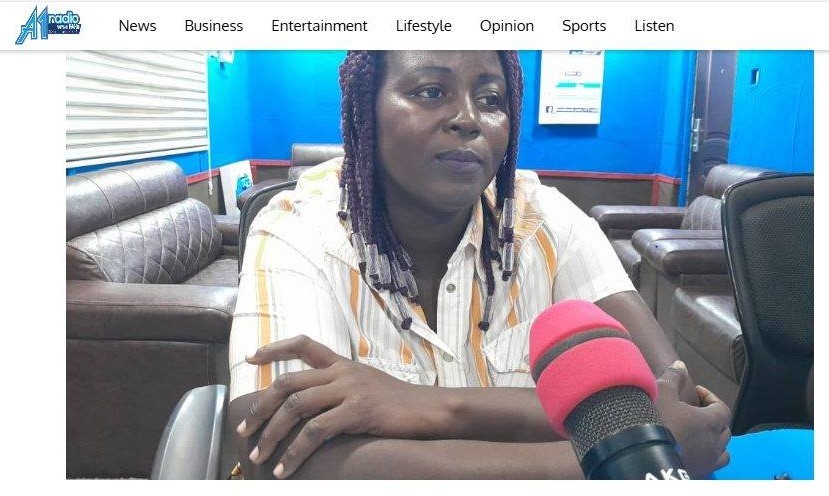
In line with our commitment to getting children back to school after the holidays, we recognise the importance of ensuring that girls remain in school. An article published recently highlighted our efforts, as we advocate for shared responsibilities in girl-child education. We believe that by engaging parents and communities, we can help shift mindsets about the value of educating girls. Our initiatives focus on creating supportive environments where girls can thrive academically without the burden of additional domestic responsibilities.
You can read more about our advocacy efforts in the full article here.
Highlighting Hope
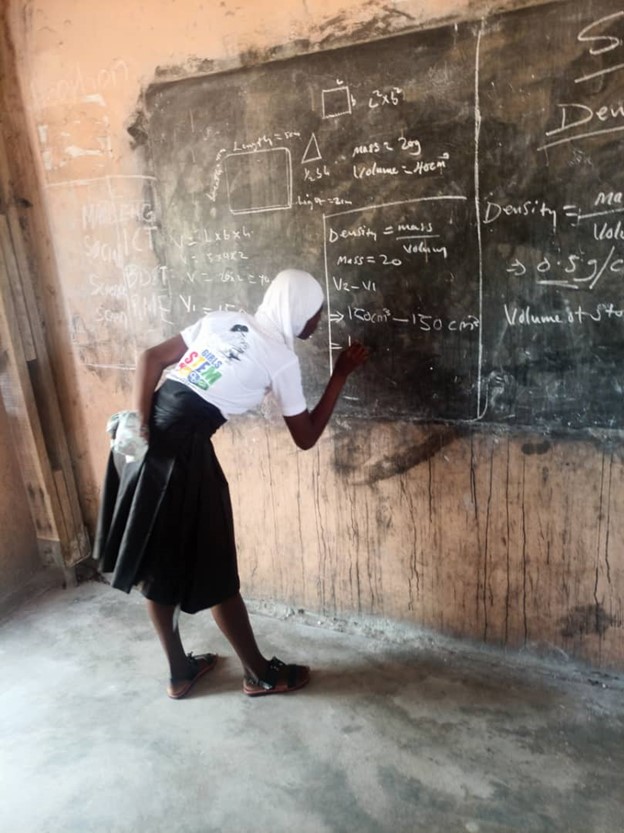
Sakina, a remarkable 17-year-old girl from the Binduri District, embodies the challenges many children face in pursuing education.
Sakina lives with her grandmother and younger brother. Her parents’ divorce led her and her brother to be raised by their maternal grandmother, who is a farmer with limited income. Despite these challenges, Sakina attends Junior High School and is in her final year.
Her grandmother struggles to meet their educational needs, prompting Sakina to take on labour-intensive work in local farms and gardens during both the wet and dry seasons. “I do by day so that I can get money to buy my books and soap for washing my uniform and pay for anything that the school may ask us to pay,” Sakina explains.
On a good day, she earns about 15 Ghana cedis (70p), but this income isn’t consistent. “When things get tough, I sometimes have to miss school to work,” she admits. This reality often makes her late for school, as she wakes up early to fit in work before classes.
Her determination was put to the test during preparations for the Basic Education Certificate Examination, where she faced additional financial burdens for mock exams and necessary materials. “I had to forgo the mock exams sometimes to make money,” she shares. It was during these trying times that Sakina contemplated quitting school, feeling overwhelmed by her struggles.
A Turning Point: AfriKids’ Support
Her involvement in the STEM (Science, Technology, Engineering, and Mathematics) club introduced by AfriKids has been transformative. “I joined the STEM club a year ago and have enjoyed the activities so much that I just did not want to miss it for anything,” she notes. The encouragement from the club helped her persevere in her studies.
Additionally, receiving reusable sanitary pads from AfriKids was a life-changing moment for Sakina. “It was one of the greatest gifts ever,” she says, acknowledging the impact on her life and the lives of her peers.
Sakina’s science teacher, Mr. Harruna, speaks highly of her dedication. “Sakina is a very hard-working student and academically gifted,” he affirms. “Despite her challenging situation, she still comes first in most subjects.”
Sakina’s story is not just about overcoming adversity; it’s a testament to the power of community support, education, and the initiatives led by AfriKids. As we embark on another school year, we recognise that many children still face barriers similar to Sakina’s.
How you can help
Your support is crucial in ensuring that stories like Sakina’s continue to inspire hope and change. By donating to AfriKids, you directly contribute to programmes that provide essential educational resources and community support for children in need.
Join us in empowering the next generation. Your contribution can make a significant impact.
Donate here: https://afrikids.org/donate/
Thank you for your continued support!
Leave a Reply