

As fields across northern Ghana fill with the colour and energy of harvest, families here are working harder than ever – not only on their farms but also for their children’s education.
This September, for the second year running, AfriKids launched our Back to School campaign — one of our flagship initiatives with your support to make sure every child starts school at the recommended age (four years old) and that those who’ve fallen behind find their way back into the classroom. We’ve just completed a new data survey on its impact, and we’re excited to share the results with you.
Communities drive a new surge in school enrolment
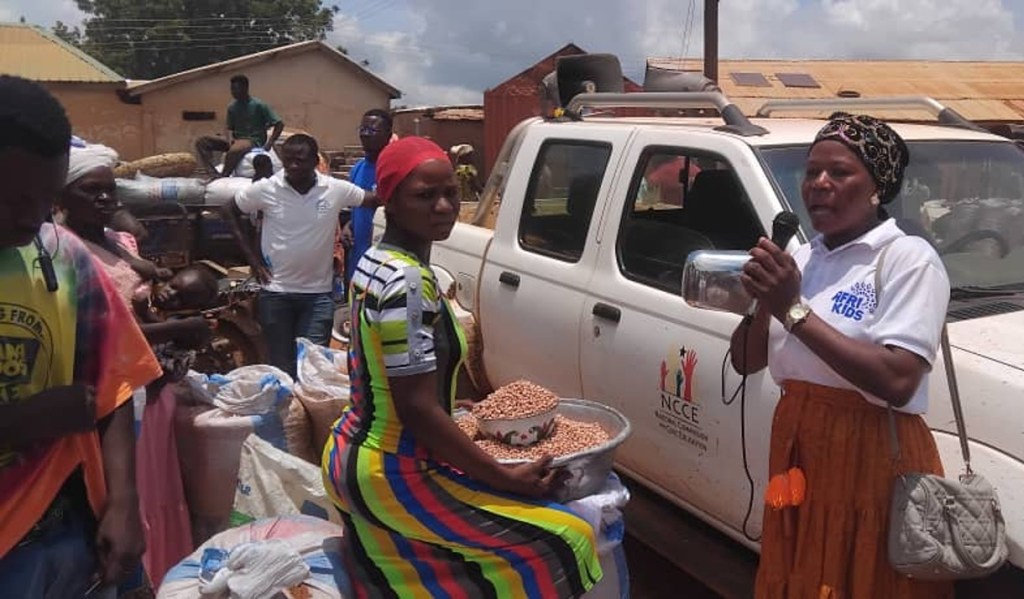
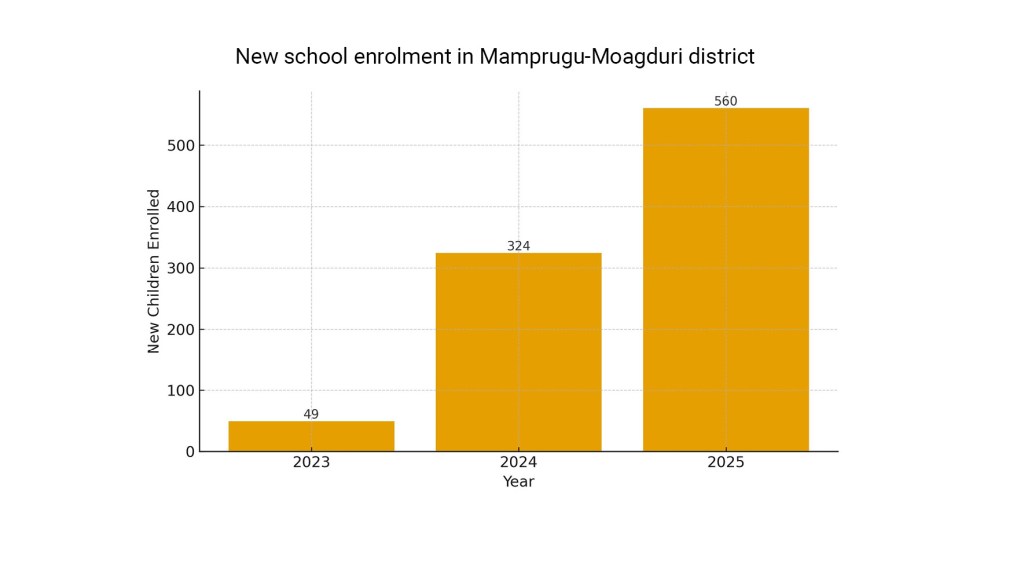
This year’s Back to School campaign showed just how powerfully communities are driving change from within. Across three districts, 4,458 children were enrolled on their first day of school – 40% of them either new or returning pupils who had previously dropped out. In Mamprugu-Moagduri, the most deprived district we work in and where the teachers to pupils ratio is alarmingly low, enrolment surged by 73%. That growth was powered by the determination of parents, teachers, and local leaders bought together by AfriKids to see more excited faces take their first steps into the classroom.
Why does it matter?
Enrolling children at the right age is one of the simplest but most powerful ways to set them up for success. In northern Ghana, where one in four children are still out of school, late enrolment often means they start learning long after their peers – and spend their school years struggling to catch up. By the time they reach upper primary, only around half of learners aged ten can read or write at the level expected for their age, a gap that can follow them for life. Getting children into school on time gives them the best chance to build strong foundations in literacy and numeracy, stay motivated, and progress confidently through their education – breaking the cycle of poverty before it begins.

10-year-old twin sisters, Warahana and Rakia* were two of the children who started school on time this year. They are from a semi‑nomadic community called the Fulbe, and their mother Ruhiana made a bold decision to enrol them in school, breaking long-held traditions of her community who are bought up to herd cattle. You can read more about what motivated her decisions at this link.
What made the biggest difference this time?
Local leaders led by example
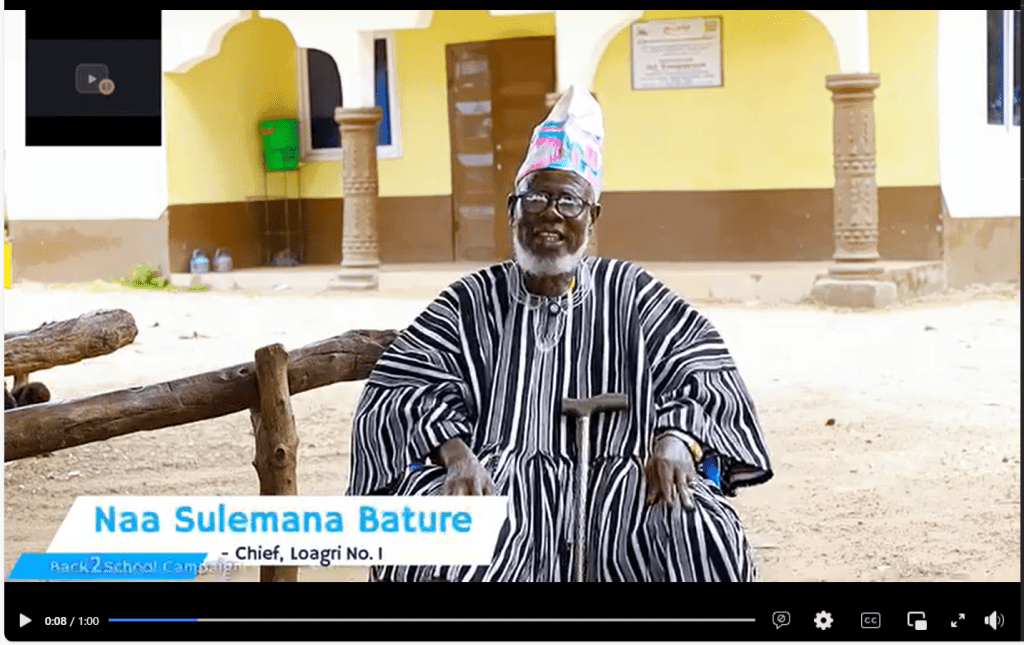
Chiefs and Queen Mothers didn’t just speak about the importance of education – they showed it. On the first day of school, many arrived at classrooms themselves, setting a powerful example for parents and children alike. Some even launched YouTube and WhatsApp campaigns, sharing videos in local languages about why every child should start school on the very first day. These clips went viral, passed from teacher to teacher and parent to parent, reaching families in even the most remote villages.

Widespread TV and radio coverage
For the first time ever, AfriKids ran adverts across local TV and radio stations to remind families that children belong in classrooms, not at home or on the farm. Broadcast in local languages, these messages reached more than 9,000 people and helped spark a regional conversation about the value of education for every child. In many villages, a child misses school not out of neglect, but simply because their parents don’t know when the new term begins. Sometimes, all it takes is a familiar voice on the radio – a timely reminder – to get a child through the school gates on day one.

Teachers went the extra mile – literally
Despite an enormous teacher shortage – with some schools having as many as 900 pupils but only four teachers – over 70% of teachers and headteachers took to the streets, visiting homes one by one to encourage parents to enrol their children. In areas where families have lost faith in the education system, this personal outreach was transformative. It showed parents that teachers do care, and that sending their child to school really can change their future.

Parents stepped up to fill vital gaps
Faced with too few teachers and limited resources, parents refused to give up. Many have been paying for volunteer assistants out of their own pockets so that every classroom has an adult to help children learn. Others have built desks and benches from local wood, ensuring pupils don’t have to sit on the bare floor. These small acts of commitment are reshaping what’s possible – proving that when communities come together, every child can have the chance to learn.
Now children are in school, how do we ensure they stay?
When asked in our post-campaign survey, almost 9 in 10 parents told us that the reason they decided to enrol their child in school was because they had been motivated by our Back to School campaign, inspired by a shared understanding that education is the surest way to a better future. Their responses also showed a growing sense of responsibility to support their children’s learning going forward:
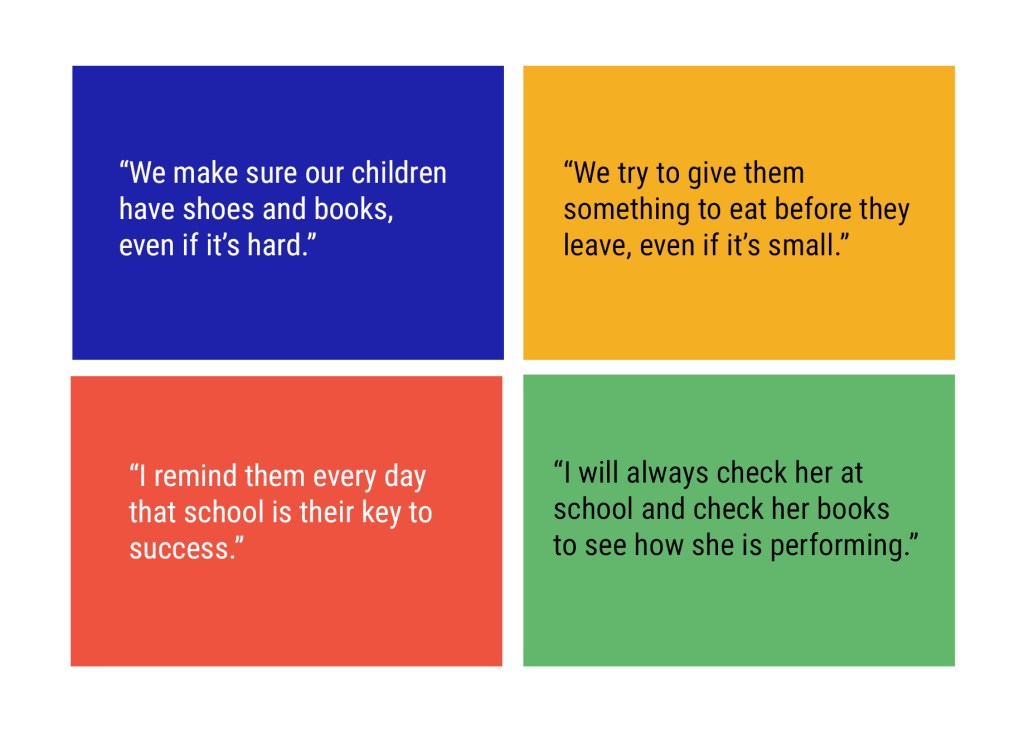
What’s more, over 94% of respondents told us they believe that both boys and girls have equal chances to stay in school within their community – a promising sign that mindsets are shifting and gender equality is becoming the new norm.
When families participate in school-related activities, it sends a powerful message to children that their education is valued and that they are not alone in their journey. This sense of encouragement can significantly boost a child’s confidence, motivation, and willingness to attend and engage in school, creating a nurturing environment where learning is embraced and sustained.
Overcoming the challenges
With the harvest season upon us throughout November and December, many children miss school to help their family on the farms. We heard from the parents about what their biggest concerns are to keeping their children in school:
- Nearly 3 in 4 parents said the cost of school fees, uniforms, and books are the most significant obstacle to sustained attendance,
- More than half told us that the distance to school and limited transport options will be a barrier,
- And 49% listed health-related issues may distract from schooling.
So now we turn your support to strategies that help communities build their resilience to face these challenges.
- Solutions that support mothers of children most at risk of dropping out with stable incomes so they can afford school fees, uniforms and books and can pay the fuel costs to get to school, or buy a bicycle.
- Upskilling teachers to provide inspiring learning environments that make children love learning and open their minds.
- Supporting parents to access healthcare and showing families how to balance both school and family responsibilities. By showing that education can coexist with the realities of rural life, we help ensure that temporary hardship doesn’t turn into permanent loss of opportunity.
So, what has all this taught us?
When parents and local communities are equipped with the right knowledge and skills, they become active partners in education, helping to ensure that all children are not just attending school, but truly learning. When they can afford for their child to learn rather than work, and believe that a child’s future is improved with education, they ensure all their children learn – both in school and beyond the classroom at home and in their communities. By strengthening both the means and the motivation for families and communities to engage in education, they create meaningful learning opportunities for every child. Our role together is to support them with the means and motive so they can prioritise education, and then they will create the opportunity for every child to learn.
Together, these efforts demonstrate the potential within communities to shape brighter futures for all children.
*names have been changed for safety reasons*
Leave a Reply