

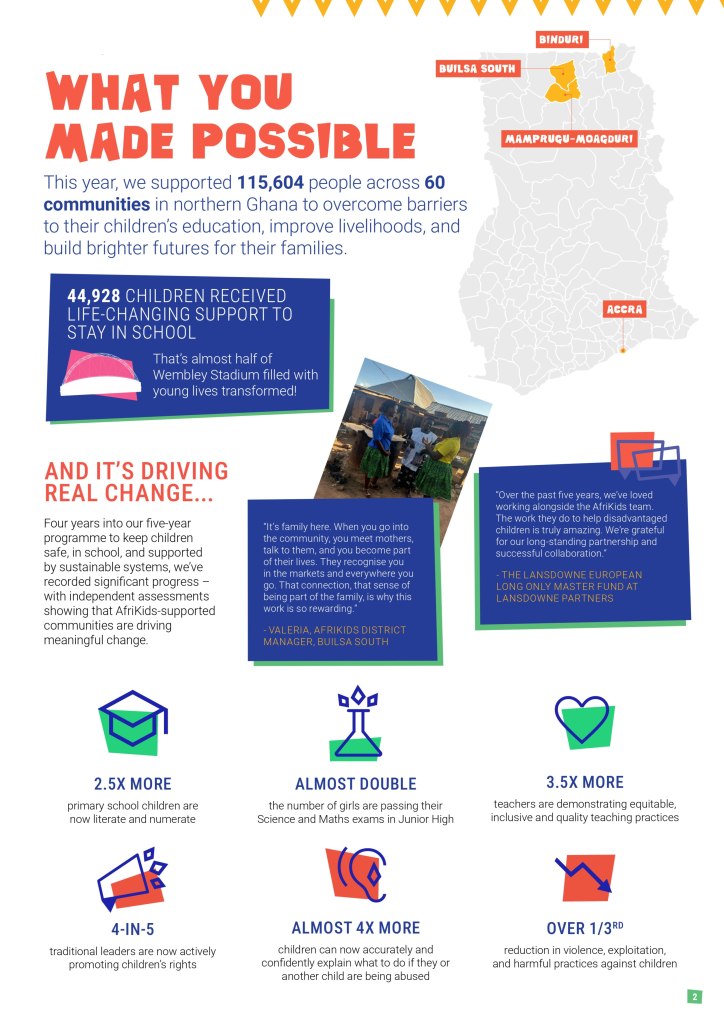
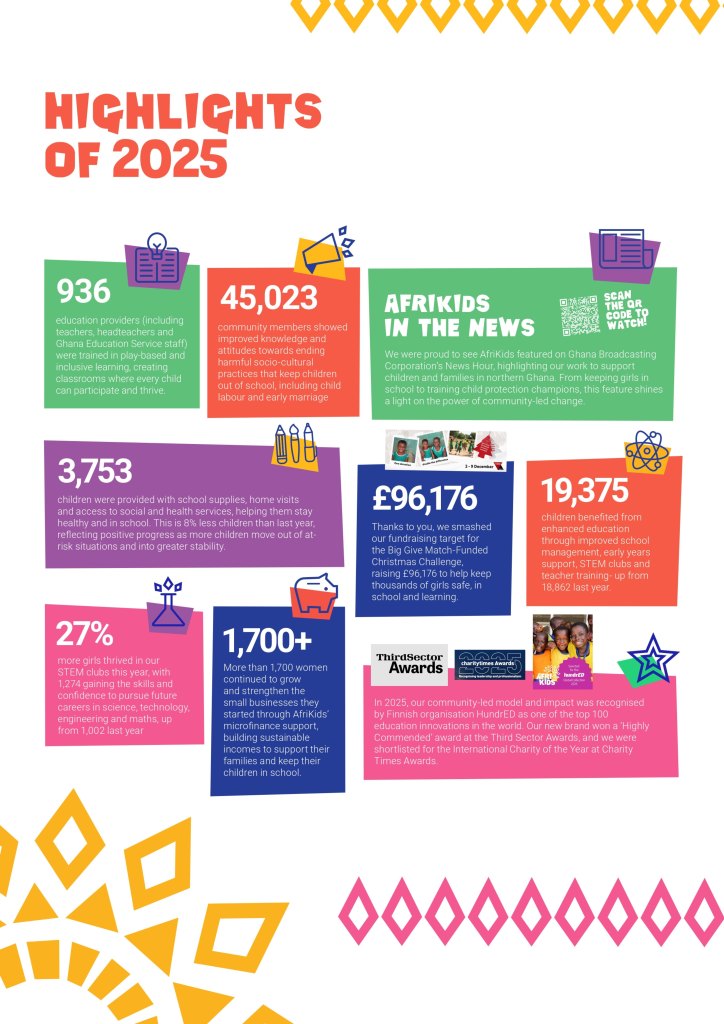
HIGHLIGHTS OF 2025
CASE STUDIES
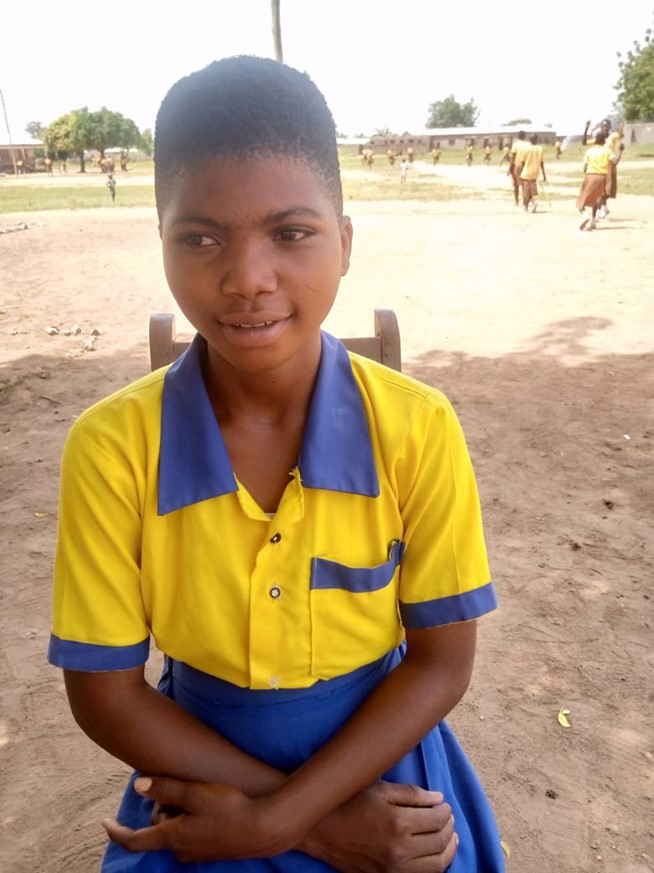
Ramatu: Back to School After “Kayaye”
Supporting girls to stay in school
Fifteen-year-old Ramatu, like many of her peers in rural northern Ghana, believed traveling to southern Ghana to work as a “kayaye” (head porter) would be more rewarding than staying in school. Living with her single father, life at home was tough and she felt she needed to abandon her dreams of becoming a nurse in order to work and help make ends meet.
She decided to travel to Ghana’s capital, Accra to try and earn money, despite knowing the risks and challenges of life as a kayaye—such as sleeping in the open, facing potential assault, and struggling to find food.
The turning point came when AfriKids engaged with the local chief and key stakeholders in her community. The chief urged parents across the community to bring their children back from Accra and re-enroll them in school. Ramatu, who had just returned home and was planning another trip to Accra, heeded this advice and decided to return to school instead.
Although she had to take retake a year at school to catch up, Ramatu remained determined. She joined the new Sexual and Reproductive Health and Rights (SRHR) club that AfriKids had set up in her school, and was elected president by her peers. This role gave her a sense of purpose and belonging, further discouraging her from dropping out of school.
Ramatu says: “I no longer want to go back to kayaye because of the suffering there,” she said. “Being part of AfriKids’ club has given me hope, and I want to help my colleagues. As the President of the SRHR club, I am learning a lot and I believe staying in school will move me forward, not backward.”
Ramatu’s story highlights the impact of community support in keeping girls in school and helping them achieve their dreams.
Ramatu: Back to School After “Kayaye”
Supporting girls to stay in school
Fifteen-year-old Ramatu, like many of her peers in rural northern Ghana, believed traveling to southern Ghana to work as a “kayaye” (head porter) would be more rewarding than staying in school. Living with her single father, life at home was tough and she felt she needed to abandon her dreams of becoming a nurse in order to work and help make ends meet.
She decided to travel to Ghana’s capital, Accra to try and earn money, despite knowing the risks and challenges of life as a kayaye—such as sleeping in the open, facing potential assault, and struggling to find food.
The turning point came when AfriKids engaged with the local chief and key stakeholders in her community. The chief urged parents across the community to bring their children back from Accra and re-enroll them in school. Ramatu, who had just returned home and was planning another trip to Accra, heeded this advice and decided to return to school instead.
Although she had to take retake a year at school to catch up, Ramatu remained determined. She joined the new Sexual and Reproductive Health and Rights (SRHR) club that AfriKids had set up in her school, and was elected president by her peers. This role gave her a sense of purpose and belonging, further discouraging her from dropping out of school.
Ramatu says: “I no longer want to go back to kayaye because of the suffering there,” she said. “Being part of AfriKids’ club has given me hope, and I want to help my colleagues. As the President of the SRHR club, I am learning a lot and I believe staying in school will move me forward, not backward.”
Ramatu’s story highlights the impact of community support in keeping girls in school and helping them achieve their dreams.

Monica’s Story
From daily struggle to being a thriving business owner within a year
Monica, a mother from northern Ghana was facing immense challenges as she cared for her five-year-old son, Mishack, who has cerebral palsy and cannot walk. With her full attention devoted to Mishack, Monica found it impossible to make time to work and earn the income to meet their basic needs.
Last year, Monica’s life took a positive turn when she was selected for training and support by AfriKids to establish an independent livelihood. With determination, she diligently attended the soap-making training provided by AfriKids and successfully completed the program.
Monica initially teamed up with two colleagues to polish her skills and later began soap production on her own. With help from relatives and a small grant from AfriKids to help expand her business, she purchased more ingredients and had a carpenter make soap production equipment for her, increasing her productivity and profit margins.
Monica’s hard work has paid off. She now produces soap in large quantities from her home, including shower gel, and supplies eight different stores. She also sells her products door-to-door, having become a trusted soap provider in her community.
“Now, I can say that most people in my area come to me to buy soap. They say it is good and really in demand,” she proudly shares.
With her earnings, Monica can now care for Mishack and her family. Mishack is now in school, and Monica no longer needs to buy soap for her household. She earns a profit from each gallon of soap she makes and now dreams of expanding her business to factory-level production and training young people in soap-making to promote self-employment in her community.
Pictured: Monica and her son, Mishack
Monica’s Story
From daily struggle to being a thriving business owner within a year
Monica, a mother from northern Ghana was facing immense challenges as she cared for her five-year-old son, Mishack, who has cerebral palsy and cannot walk. With her full attention devoted to Mishack, Monica found it impossible to make time to work and earn the income to meet their basic needs.
Last year, Monica’s life took a positive turn when she was selected for training and support by AfriKids to establish an independent livelihood. With determination, she diligently attended the soap-making training provided by AfriKids and successfully completed the program.
Monica initially teamed up with two colleagues to polish her skills and later began soap production on her own. With help from relatives and a small grant from AfriKids to help expand her business, she purchased more ingredients and had a carpenter make soap production equipment for her, increasing her productivity and profit margins.
Monica’s hard work has paid off. She now produces soap in large quantities from her home, including shower gel, and supplies eight different stores. She also sells her products door-to-door, having become a trusted soap provider in her community.
“Now, I can say that most people in my area come to me to buy soap. They say it is good and really in demand,” she proudly shares.
With her earnings, Monica can now care for Mishack and her family. Mishack is now in school, and Monica no longer needs to buy soap for her household. She earns a profit from each gallon of soap she makes and now dreams of expanding her business to factory-level production and training young people in soap-making to promote self-employment in her community.
Pictured: Monica and her son, Mishack

Amazing Amos
The power of motivated teachers
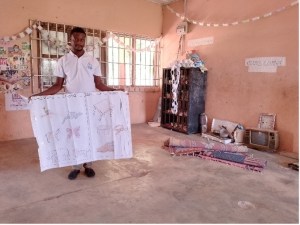
In the Upper East Region of Ghana, a kindergarten in a remote rural village was facing significant challenges. Enrollment was low, classrooms were bare and uninspiring, and educational materials went unused. But everything changed with the arrival of Amos, a dedicated and creative KG teacher.
Amos says: “With the help of AfriKids Ghana having engaged KG teachers …on teaching methodologies and provided us with teaching and learning materials, I took this as a rare opportunity…to make the best out of it since the major challenge in the schools is capacity building and resources….I have always wanted to put smiles on children that I come into contact with and that should have a positive impact in their lives beyond the school environment. Wherever I am sent to work, that is where my services are needed and I put up my best. And so, when I was transferred here, I took the opportunity to set up this school KG to make my lessons practical and friendly to my class pupils. And as you can see, my class children are happy to be in school and I can tell you that, they hardly want to go on break unless I force them. The classroom environment has convinced them to always be in class.”
With support from AfriKids, within just one term, Amos transformed the kindergarten classroom into a vibrant and engaging space. His artistic talents and the integration of music and colorful decorations made the classroom a welcoming place for children. Amos composed phonic songs in both the language, Buli and English, enhancing the children’s learning experience and making it easier for children with lower levels of English to join in and catch up.
The impact was immediate. Parents, curious about the changes, began visiting the school. Enrollment numbers soared from 83 to 103, with equal gender balance. Headteacher Mr. Charles praised Amos: “This term has been one of my happiest sessions as Teacher and Head Teacher of [this school] due to the efforts of my KG teacher. Amos has made his classrooms and lessons so attractive that anytime the KG is in session, even the primary children will run to peep through the windows and as well practice whatever is ongoing in the classroom. I have personally seen some passerby parents and other community members hiding to see what exactly is going on during some KG lessons. Amos is a blessing to the school and GES [Ghana Education Service] at large.”
Amos’ commitment extends beyond his own classroom. With challenges in understaffing, he also finds time to support other classes, ensuring that all students are occupied and learning, even in the absence of their regular teachers. Amos’ story is a powerful example of how one passionate teacher can revitalise a struggling school and inspire an entire community.
Amazing Amos
The power of motivated teachers
In the Upper East Region of Ghana, a kindergarten in a remote rural village was facing significant challenges. Enrollment was low, classrooms were bare and uninspiring, and educational materials went unused. But everything changed with the arrival of Amos, a dedicated and creative KG teacher.
Amos says: “With the help of AfriKids Ghana having engaged KG teachers …on teaching methodologies and provided us with teaching and learning materials, I took this as a rare opportunity…to make the best out of it since the major challenge in the schools is capacity building and resources….I have always wanted to put smiles on children that I come into contact with and that should have a positive impact in their lives beyond the school environment. Wherever I am sent to work, that is where my services are needed and I put up my best. And so, when I was transferred here, I took the opportunity to set up this school KG to make my lessons practical and friendly to my class pupils. And as you can see, my class children are happy to be in school and I can tell you that, they hardly want to go on break unless I force them. The classroom environment has convinced them to always be in class.”
With support from AfriKids, within just one term, Amos transformed the kindergarten classroom into a vibrant and engaging space. His artistic talents and the integration of music and colorful decorations made the classroom a welcoming place for children. Amos composed phonic songs in both the language, Buli and English, enhancing the children’s learning experience and making it easier for children with lower levels of English to join in and catch up.
The impact was immediate. Parents, curious about the changes, began visiting the school. Enrollment numbers soared from 83 to 103, with equal gender balance. Headteacher Mr. Charles praised Amos: “This term has been one of my happiest sessions as Teacher and Head Teacher of [this school] due to the efforts of my KG teacher. Amos has made his classrooms and lessons so attractive that anytime the KG is in session, even the primary children will run to peep through the windows and as well practice whatever is ongoing in the classroom. I have personally seen some passerby parents and other community members hiding to see what exactly is going on during some KG lessons. Amos is a blessing to the school and GES [Ghana Education Service] at large.”
Amos’ commitment extends beyond his own classroom. With challenges in understaffing, he also finds time to support other classes, ensuring that all students are occupied and learning, even in the absence of their regular teachers. Amos’ story is a powerful example of how one passionate teacher can revitalise a struggling school and inspire an entire community.

Jessica’s Story
Breaking barriers for girls in STEM
Before meeting AfriKids, 15 year old Jessica was struggling with maths and science:
“The two subjects have been hard nuts to crack since my primary school days.” She said, “They were my scarecrow and a mere mention of the subjects got me intimidated. My fear for these subjects reached quite an alarming height that anytime we had lessons on these subjects, l began to find excuses in order to avoid lessons akin to them.”
Her school did not have equipment for practical science lessons and along with many of her classmates, she found it difficult to grasp science topics like mixtures and electronics.
The situation changed dramatically when her school was selected to be part of AfriKids’ programme working to breakdown barriers to girls in STEM by establishing STEM clubs dedicated to providing safe spaces for girls, supplied with practical equipment for hands-on learning. Jessica’s school received a STEM kit including measuring cylinders, electronic balances, beakers, science sets, pipettes, and basic electronic items like batteries, capacitors, and wires. These tools allowed Jessica and her classmates to better understand and apply the concepts being taught, improving their comprehension and performance in exams.
Jessica’s transformation in her academic life has been remarkable. Previously timid and unsure during science and math lessons, she has now developed confidence in these subjects and is even secretary of her STEM club. Math has become her favourite subject, and she actively participates in class and group work without fear. She is confident in her performance in the recently completed Basic Education Certificate Examination and has chosen General Science as her course of study in senior high school.
STEM has rekindled Jessica’s interest in science and inspired her to explore more about technology and engineering. She now dreams of becoming a doctor and believes that, thanks to AfriKids’ support, this dream is within reach. Jessica expressed her gratitude to AfriKids for their intervention, which has transformed her academic outlook and opened new possibilities for her future.
Jessica’s Story
Breaking barriers for girls in STEM
Before meeting AfriKids, 15 year old Jessica was struggling with maths and science:
“The two subjects have been hard nuts to crack since my primary school days.” She said, “They were my scarecrow and a mere mention of the subjects got me intimidated. My fear for these subjects reached quite an alarming height that anytime we had lessons on these subjects, l began to find excuses in order to avoid lessons akin to them.”
Her school did not have equipment for practical science lessons and along with many of her classmates, she found it difficult to grasp science topics like mixtures and electronics.
The situation changed dramatically when her school was selected to be part of AfriKids’ programme working to breakdown barriers to girls in STEM by establishing STEM clubs dedicated to providing safe spaces for girls, supplied with practical equipment for hands-on learning. Jessica’s school received a STEM kit including measuring cylinders, electronic balances, beakers, science sets, pipettes, and basic electronic items like batteries, capacitors, and wires. These tools allowed Jessica and her classmates to better understand and apply the concepts being taught, improving their comprehension and performance in exams.
Jessica’s transformation in her academic life has been remarkable. Previously timid and unsure during science and math lessons, she has now developed confidence in these subjects and is even secretary of her STEM club. Math has become her favourite subject, and she actively participates in class and group work without fear. She is confident in her performance in the recently completed Basic Education Certificate Examination and has chosen General Science as her course of study in senior high school.
STEM has rekindled Jessica’s interest in science and inspired her to explore more about technology and engineering. She now dreams of becoming a doctor and believes that, thanks to AfriKids’ support, this dream is within reach. Jessica expressed her gratitude to AfriKids for their intervention, which has transformed her academic outlook and opened new possibilities for her future.
Project Results
Opening Doors to Schools 2 (ODTS2)
Project dates: 2018 – 2021
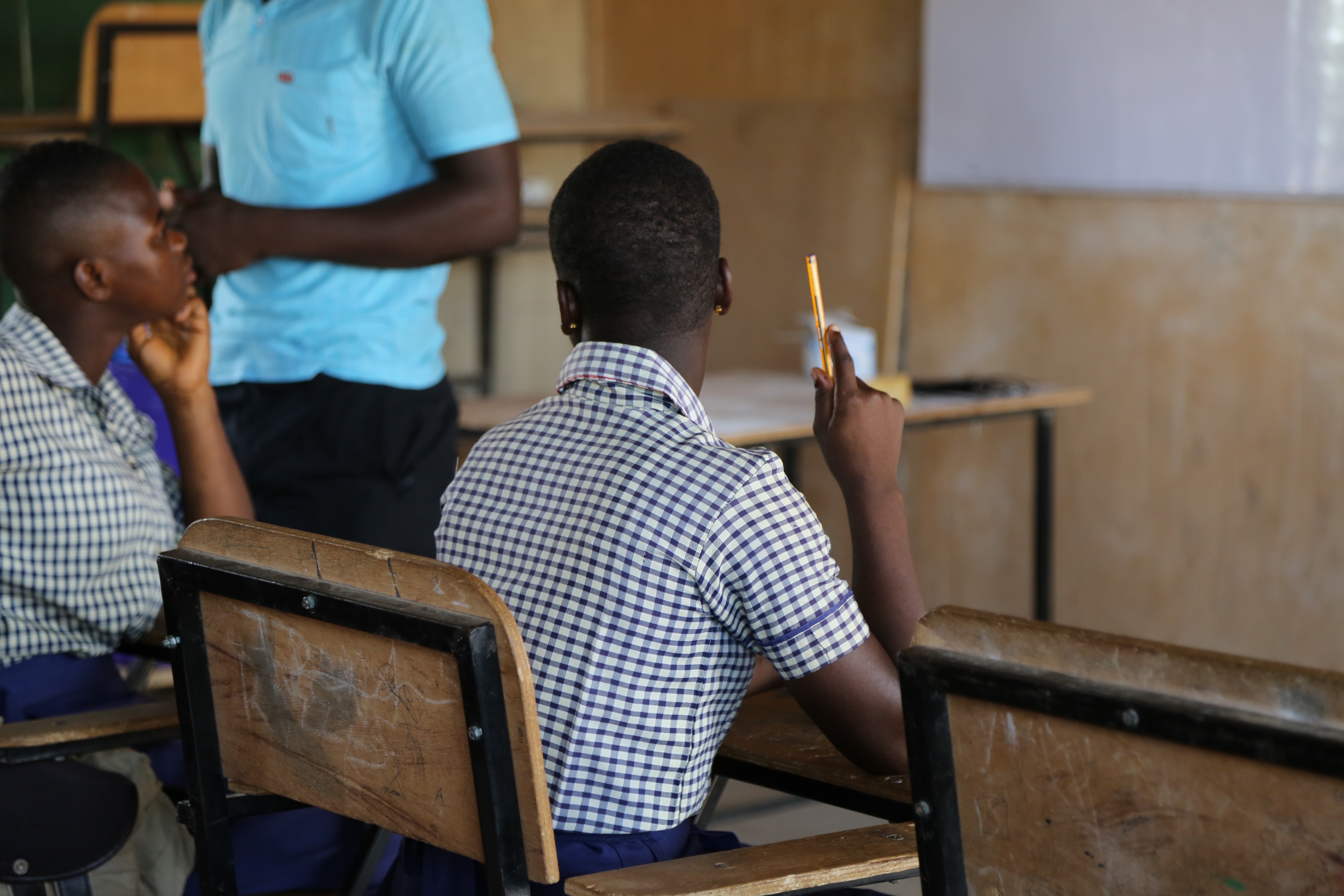
Aimed to improve basic education for children in 60 schools in poor communities in the Upper East Region (UER) of Ghana by increasing net enrolment, completion and academic performance in English and Maths. The second phase of the project targeted 80 schools and had the objectives of improving access to education at Primary level, with a focus on girls and children at risk of dropping out of school. Further, the project aimed to improve the quality of teaching in the target districts through the Dynamic Approach to School Improvement (DASI) model. To sustain these changes there was a need to improve school governance at the school, community and district levels, which AfriKids worked to address.
Results:
The second phase, was unfortunately heavily disrupted by the Covid-19 pandemic, yet saw the following results:
- Pupils were achieving 9% higher than the target in the first year.
- At the end of year one, teachers scoring above expected proficiency was 11% above target and 52% above the baseline.
Opening Doors to Schools 2 (ODTS2)
Project dates: 2018 – 2021
Aimed to improve basic education for children in 60 schools in poor communities in the Upper East Region (UER) of Ghana by increasing net enrolment, completion and academic performance in English and Maths. The second phase of the project targeted 80 schools and had the objectives of improving access to education at Primary level, with a focus on girls and children at risk of dropping out of school. Further, the project aimed to improve the quality of teaching in the target districts through the Dynamic Approach to School Improvement (DASI) model. To sustain these changes there was a need to improve school governance at the school, community and district levels, which AfriKids worked to address.
Results:
The second phase, was unfortunately heavily disrupted by the Covid-19 pandemic, yet saw the following results:
- Pupils were achieving 9% higher than the target in the first year.
- At the end of year one, teachers scoring above expected proficiency was 11% above target and 52% above the baseline.
School of Night Rabbits
Project dates: 2009 – 2020 (annual programme)
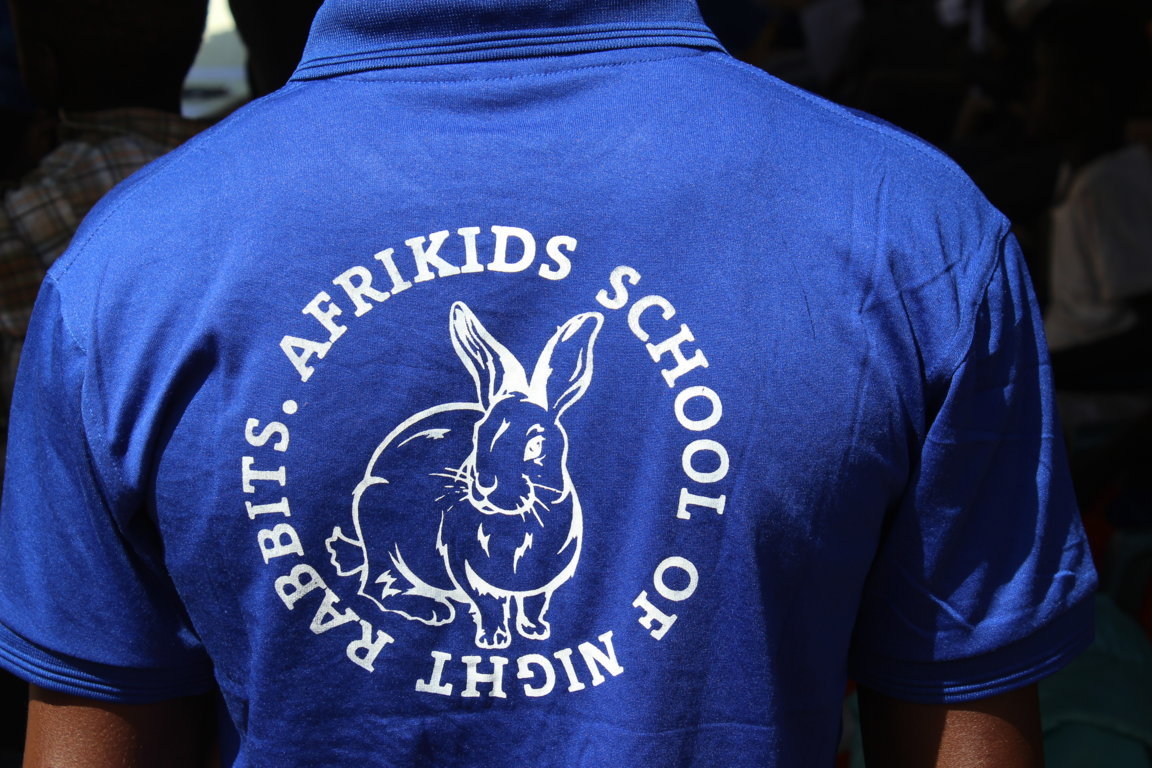
One of AfriKids’ earliest projects, and the first example of our Accelerated Learning Programmes – catch-up classes for out of school children and supporting them to transition into formal education or vocational skills training. The School of Night Rabbits was so-called as it focused on children living and working on the streets, and so held classes in the evening when there were fewer opportunities to earn money, encouraging attendance. Children were taught foundational numeracy and literacy as well as cultural and life skills like drumming, dancing, health and hygiene. The project also provided counselling to children and worked with their families to encourage their commitment to ensuring their children’s education for future livelihood security. Livelihood improvement support packages were provided, and access to safe children’s homes for those that needed safe places to sleep, eat and wash.
Results:
- Over 8,000 out of school children enrolled into school, with a retention rate of about 70%.
- Over 250 teens supported with vocational skills training, including apprenticeship placements with local businesses or materials to set up on their own. Around 210 of them are now engaged in their own businesses.
- Over 450 children were reintegrated with their families and over 400 families were supported with livelihood improvement packages.
School of Night Rabbits
Project dates: 2009 – 2020 (annual programme)
One of AfriKids’ earliest projects, and the first example of our Accelerated Learning Programmes – catch-up classes for out of school children and supporting them to transition into formal education or vocational skills training. The School of Night Rabbits was so-called as it focused on children living and working on the streets, and so held classes in the evening when there were fewer opportunities to earn money, encouraging attendance. Children were taught foundational numeracy and literacy as well as cultural and life skills like drumming, dancing, health and hygiene. The project also provided counselling to children and worked with their families to encourage their commitment to ensuring their children’s education for future livelihood security. Livelihood improvement support packages were provided, and access to safe children’s homes for those that needed safe places to sleep, eat and wash.
Results:
- Over 8,000 out of school children enrolled into school, with a retention rate of about 70%.
- Over 250 teens supported with vocational skills training, including apprenticeship placements with local businesses or materials to set up on their own. Around 210 of them are now engaged in their own businesses.
- Over 450 children were reintegrated with their families and over 400 families were supported with livelihood improvement packages.

Strategic Approaches to Girls’ Education (STAGE)
Project dates: 2018 – 2023 | Key funders: FCDO Girls’ Education Challenge Fund
The World Education International Strategic Approach to Girls’ Education (STAGE) project aimed to support highly marginalised girls in completing formal or informal education through a holistic approach including Accelerated Learning Programmes (ALPs). Delivered in partnership with Ghana Education Service, the project was delivered with 300 schools across 13 districts of northern Ghana, with AfriKids being one of several core implementing partners.
Results (total project)[1]:
- 8,245 girls completed the formal track and 9,582 completed non-formal learning in 20 trades. 1,600 of these girls had a disability.
- 7% of the formal track girls, who completed 9 month ALPs in their communities, recorded improvement and transitioned into formal school at the end of the academic year in December 2022.
- 94% of the non-formal track girls commenced income-generating activities with their new skills. The remaining 6% continued with further studies.
- 444 teacher mentors were trained in the production of reusable sanitary pads, who in turn trained 7,441 girls.
- Improvement in school attendance and retention
- Government commitment to continued efforts to reduce child marriage, teenage pregnancy, parental involvement and gender-based violence as key barriers to girls’ education.
[1] https://gna.org.gh/2023/02/stage-project-to-enhance-girls-education-ends/
Strategic Approaches to Girls’ Education (STAGE)
Project dates: 2018 – 2023 | Key funders: FCDO Girls’ Education Challenge Fund
The World Education International Strategic Approach to Girls’ Education (STAGE) project aimed to support highly marginalised girls in completing formal or informal education through a holistic approach including Accelerated Learning Programmes (ALPs). Delivered in partnership with Ghana Education Service, the project was delivered with 300 schools across 13 districts of northern Ghana, with AfriKids being one of several core implementing partners.
Results (total project)[1]:
- 8,245 girls completed the formal track and 9,582 completed non-formal learning in 20 trades. 1,600 of these girls had a disability.
- 7% of the formal track girls, who completed 9 month ALPs in their communities, recorded improvement and transitioned into formal school at the end of the academic year in December 2022.
- 94% of the non-formal track girls commenced income-generating activities with their new skills. The remaining 6% continued with further studies.
- 444 teacher mentors were trained in the production of reusable sanitary pads, who in turn trained 7,441 girls.
- Improvement in school attendance and retention
- Government commitment to continued efforts to reduce child marriage, teenage pregnancy, parental involvement and gender-based violence as key barriers to girls’ education.
[1] https://gna.org.gh/2023/02/stage-project-to-enhance-girls-education-ends/

Opening Doors to Schools 1 (ODTS)
Project dates: 2015 – 2018
Aimed to improve basic education for children in 60 schools in poor communities in the Upper East Region (UER) of Ghana by increasing net enrolment, completion and academic performance in English and Maths. The second phase of the project targeted 80 schools and had the objectives of improving access to education at Primary level, with a focus on girls and children at risk of dropping out of school. Further, the project aimed to improve the quality of teaching in the target districts through the Dynamic Approach to School Improvement (DASI) model. To sustain these changes there was a need to improve school governance at the school, community and district levels, which AfriKids worked to address.
Results:
- 16% increase in enrolment for boys and 17% for girls compared to the baseline.
- 99% of pupils (both boys and girls) remained in school and completed the academic years.
- 28% and 35% increase for boys and girls respectively in English and 50% and 56% increase for boys and girls in Maths, exceeding project targets.
Opening Doors to Schools 1 (ODTS)
Project dates: 2015 – 2018
Aimed to improve basic education for children in 60 schools in poor communities in the Upper East Region (UER) of Ghana by increasing net enrolment, completion and academic performance in English and Maths. The second phase of the project targeted 80 schools and had the objectives of improving access to education at Primary level, with a focus on girls and children at risk of dropping out of school. Further, the project aimed to improve the quality of teaching in the target districts through the Dynamic Approach to School Improvement (DASI) model. To sustain these changes there was a need to improve school governance at the school, community and district levels, which AfriKids worked to address.
Results:
- 16% increase in enrolment for boys and 17% for girls compared to the baseline.
- 99% of pupils (both boys and girls) remained in school and completed the academic years.
- 28% and 35% increase for boys and girls respectively in English and 50% and 56% increase for boys and girls in Maths, exceeding project targets.
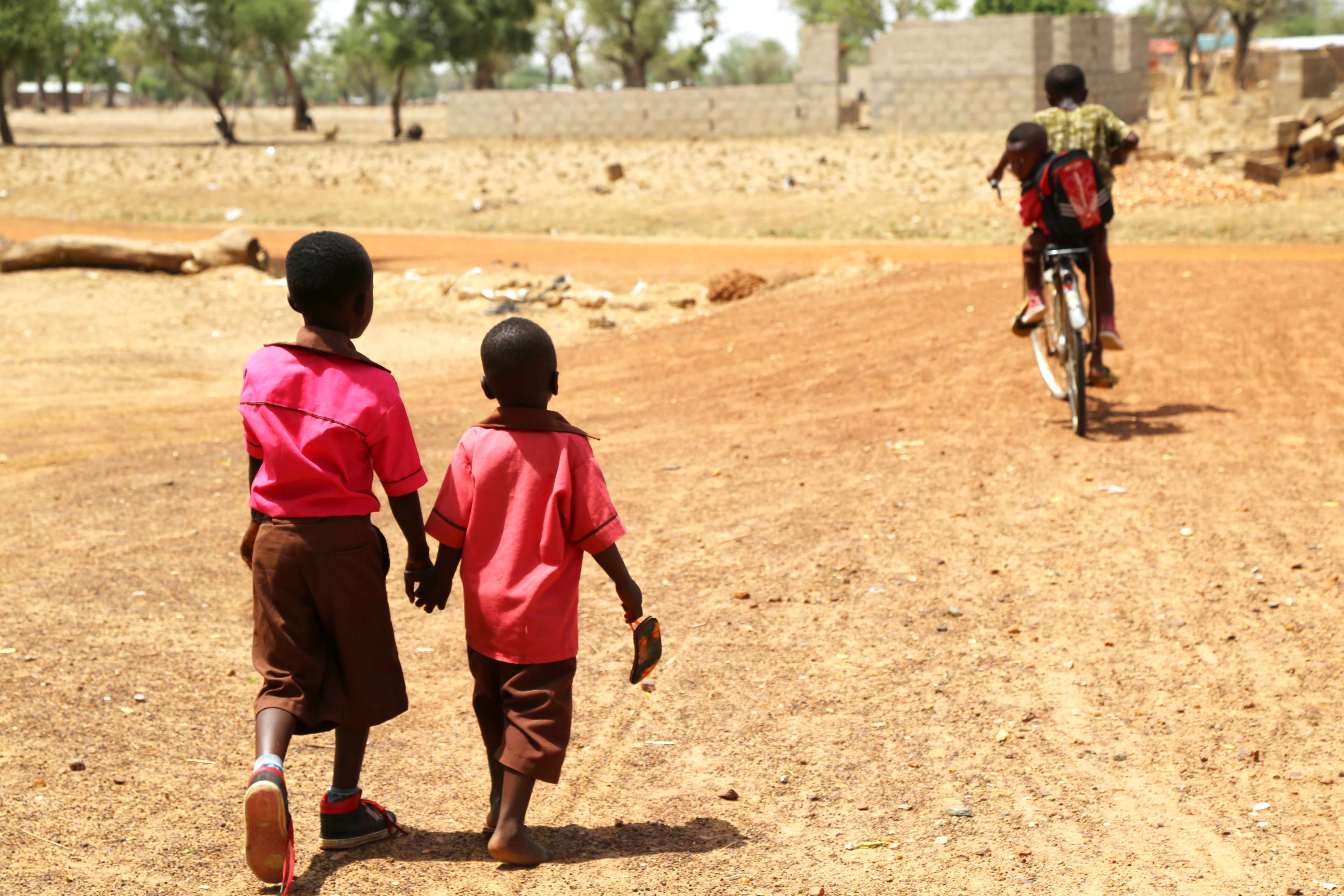
Foundations for Life 1
Project dates: 2015 – 2018
To improve the quality of early years education (Kindergarten) in line with the Government of Ghana’s early childhood education and integrated approach to learning policies. Key intervention areas were capacity building (pre-service and in-service); teacher training for practising Kindergarten (KG) teachers, piloting the Fast Track Transformational Teacher Training (FTTT) model in kindergartens in three districts in northern Ghana, promoting age-appropriate enrolment into KG (starting school at the right age), increasing community interest and
participation/support in education, and setting up model classrooms.
Results:
- 72 schools in three districts improved, supporting over 26,170 pupils
- The project provided capacity building and training to:
- 503 KG teachers (182 practicing and 321 college of education students), of which 52% female
- 15 (4 female) College of Education Tutors and 24 (7 female) DEO officials on the Fast Track Transformational Teacher Training (FTTT) model and training of teachers in phonics and the Limited Resource Teacher Training (LRTT) model. They in turn went on to serve as master trainers, training 182 (114 female) KG teachers in the FTTT approach and 281 (131 female) lower primary school teachers in phonics teaching
- 45 (11 female) primary school headteachers and 72 (18 female) KG headteachers
- 405 (67 female) SMC members and 225 (45 females) PTA executive members.
- 3,825 (2,295 female) reading club members
- 74% against a target of 65% of KG and lower primary pupils achieved proficiency after being assessed with the pupil achievement records (PAR) and the performance monitoring test (PMT).
- 58% of P1-3 pupils were able to identify letter sounds and read common comprehensive sentences, up from 4% at baseline
- 68% scored a pass mark of 50% or more in literacy, up from 23% at baseline
- 83% of SMCs/PTAs rated effective or very effective
- 81% of teachers were rated effective in Content-related Pedagogy, up from 50% at baseline
- 80% of teachers were rated effective in Instruction and Management, up from 58% at baseline
- 73% of teachers were rated effective in Promotion of pupils’ individual needs and gender equity in class, up from 31% at baseline
- 100% of schools have access to potable water, up from 67% at baseline
Foundations for Life 1
Project dates: 2015 – 2018
To improve the quality of early years education (Kindergarten) in line with the Government of Ghana’s early childhood education and integrated approach to learning policies. Key intervention areas were capacity building (pre-service and in-service); teacher training for practising Kindergarten (KG) teachers, piloting the Fast Track Transformational Teacher Training (FTTT) model in kindergartens in three districts in northern Ghana, promoting age-appropriate enrolment into KG (starting school at the right age), increasing community interest and
participation/support in education, and setting up model classrooms.
Results:
- 72 schools in three districts improved, supporting over 26,170 pupils
- The project provided capacity building and training to:
- 503 KG teachers (182 practicing and 321 college of education students), of which 52% female
- 15 (4 female) College of Education Tutors and 24 (7 female) DEO officials on the Fast Track Transformational Teacher Training (FTTT) model and training of teachers in phonics and the Limited Resource Teacher Training (LRTT) model. They in turn went on to serve as master trainers, training 182 (114 female) KG teachers in the FTTT approach and 281 (131 female) lower primary school teachers in phonics teaching
- 45 (11 female) primary school headteachers and 72 (18 female) KG headteachers
- 405 (67 female) SMC members and 225 (45 females) PTA executive members.
- 3,825 (2,295 female) reading club members
- 74% against a target of 65% of KG and lower primary pupils achieved proficiency after being assessed with the pupil achievement records (PAR) and the performance monitoring test (PMT).
- 58% of P1-3 pupils were able to identify letter sounds and read common comprehensive sentences, up from 4% at baseline
- 68% scored a pass mark of 50% or more in literacy, up from 23% at baseline
- 83% of SMCs/PTAs rated effective or very effective
- 81% of teachers were rated effective in Content-related Pedagogy, up from 50% at baseline
- 80% of teachers were rated effective in Instruction and Management, up from 58% at baseline
- 73% of teachers were rated effective in Promotion of pupils’ individual needs and gender equity in class, up from 31% at baseline
- 100% of schools have access to potable water, up from 67% at baseline

Foundations for Life 2
Project dates: 2018 – 2021
To improve the quality of early years education (Kindergarten) in line with the Government of Ghana’s early childhood education and integrated approach to learning policies. Key intervention areas were capacity building (pre-service and in-service); teacher training for practising Kindergarten (KG) teachers, piloting the Fast Track Transformational Teacher Training (FTTT) model in kindergartens in three districts in northern Ghana, promoting age-appropriate enrolment into KG (starting school at the right age), increasing community interest and
participation/support in education, and setting up model classrooms.
Results:
- Established 40 model classrooms across 20 public schools in one district, ultimately benefitting 2,217 KG pupils (1,101 female).
- The project provided capacity building and training to:
- 53 practicing teachers (37 female)
- 17 headteachers (24 female) to mainstream activity-based and child-centred learning.
- 9 GES and College of Education officials as facilitators
- 60 (25 female) community volunteers to facilitate lessons during the COVID-19 pandemic.
- 53% of pupils achieved median score in the pupil achievement record (PAR) against a target of 51% and up from a baseline of 0%. The PAR assesses four areas of learning including acquisition of basic psychosocial and communication skills, pre-reading skills, pre-writing skills and mathematical skills.
- 505% increase in the number of KG pupil caregivers demonstrating support for early years education (409 caregivers (285 female) up from 81 (32 female)).
- Over 95% of sampled trained teachers demonstrated effectiveness in active, play-based teaching and learning methodologies.
- 84% of target in-service teachers have increased confidence and passed teacher demonstrability assessments in activity and play-based teaching and learning against a target of 50%.
- 0% of sampled trained teachers were rated ineffective in Knowledge of content; Instruction and Management; Compliance with established policies and Professionalism. The only assessment categories with teachers scored ineffective were Content-related pedagogy (1%) and Promotion of gender equity in class (27%).
- 100% of sampled trained teachers were rated effective across many indicators of effective teaching, including knowledge of subject matter in lesson presentation; responding to learners’ questions accurately; providing clear and appropriate information; choosing activities which encourage learners to develop and have confidence in their ability to think independently, creatively and/or critically and using a variety of instructional techniques to accommodate various learning styles of all learners including slow, disabled and advanced learners.
- District Education Office demonstrating commitment and support including furniture provision to KG classrooms, making it mandatory for the 20 intervention schools to use the capitation grant provided by government to procure KG teaching and learning resources and instructing cascading of training to more KG teachers.
- SMC/PTAs demonstrating commitment and action – examples include building a kitchen to supply a KG, supplying electricity to a school and building accommodation for teachers.
- Chiefs and community leaders introduced by-laws to promote early years education.
Foundations for Life 2
Project dates: 2018 – 2021
To improve the quality of early years education (Kindergarten) in line with the Government of Ghana’s early childhood education and integrated approach to learning policies. Key intervention areas were capacity building (pre-service and in-service); teacher training for practising Kindergarten (KG) teachers, piloting the Fast Track Transformational Teacher Training (FTTT) model in kindergartens in three districts in northern Ghana, promoting age-appropriate enrolment into KG (starting school at the right age), increasing community interest and
participation/support in education, and setting up model classrooms.
Results:
- Established 40 model classrooms across 20 public schools in one district, ultimately benefitting 2,217 KG pupils (1,101 female).
- The project provided capacity building and training to:
- 53 practicing teachers (37 female)
- 17 headteachers (24 female) to mainstream activity-based and child-centred learning.
- 9 GES and College of Education officials as facilitators
- 60 (25 female) community volunteers to facilitate lessons during the COVID-19 pandemic.
- 53% of pupils achieved median score in the pupil achievement record (PAR) against a target of 51% and up from a baseline of 0%. The PAR assesses four areas of learning including acquisition of basic psychosocial and communication skills, pre-reading skills, pre-writing skills and mathematical skills.
- 505% increase in the number of KG pupil caregivers demonstrating support for early years education (409 caregivers (285 female) up from 81 (32 female)).
- Over 95% of sampled trained teachers demonstrated effectiveness in active, play-based teaching and learning methodologies.
- 84% of target in-service teachers have increased confidence and passed teacher demonstrability assessments in activity and play-based teaching and learning against a target of 50%.
- 0% of sampled trained teachers were rated ineffective in Knowledge of content; Instruction and Management; Compliance with established policies and Professionalism. The only assessment categories with teachers scored ineffective were Content-related pedagogy (1%) and Promotion of gender equity in class (27%).
- 100% of sampled trained teachers were rated effective across many indicators of effective teaching, including knowledge of subject matter in lesson presentation; responding to learners’ questions accurately; providing clear and appropriate information; choosing activities which encourage learners to develop and have confidence in their ability to think independently, creatively and/or critically and using a variety of instructional techniques to accommodate various learning styles of all learners including slow, disabled and advanced learners.
- District Education Office demonstrating commitment and support including furniture provision to KG classrooms, making it mandatory for the 20 intervention schools to use the capitation grant provided by government to procure KG teaching and learning resources and instructing cascading of training to more KG teachers.
- SMC/PTAs demonstrating commitment and action – examples include building a kitchen to supply a KG, supplying electricity to a school and building accommodation for teachers.
- Chiefs and community leaders introduced by-laws to promote early years education.

Complementary Basic Education (CBE)
Project dates: 2012 – 2018
A Ghana-wide programme operating across 50 districts in 5 regions of the country. The project cost £27.9m, funded by the United Kingdom Department for International Development (DFID) in collaboration with US Agency for International Development (USAID) through the Government of Ghana. CBE was delivered through several implementing partners, with AfriKids selected to cover several northern regions. CBE provided an accelerated learning approach for Out of School Children (OOSC) between the ages of 8 to 14 from some of the poorest areas of the country. The catch-up classes taught children to read, write and numerate within a nine-month period, before transitioning into primary school at class 3 or 4. The entire programme supported 240,000 out of school children (approx. 50% girls) across 6,000 communities.
See a short documentary on the CBE programme featuring AfriKids here: https://vimeo.com/134298633
Results (total project):
- Over 9,600 community-based facilitators (37% female) were trained in the CBE methodology in the 2017/18 cycle.
- Over 7,000 local committees or SMCs (over 60% female members) were involved in the community organisation, oversight and running of the CBE classes.
- Over 7,344 classes in 6,348 communities were reached with the programme over five years.
- At the start of the CBE programme only one-third of children were able to do simple one-digit division; after 9 months in the CBE this increased to 80%.
- After completing the CBE programme, CBE children placed in public schools (often at P3 and P4 levels) showed similar learning levels as children in public schools.
- After one year in public schools, CBE children maintained progress in learning comparable to children in public schools in many tasks of local language literacy, English and numeracy; over a third of CBE children achieved 80% correct responses in the English literacy assessment, similar to those achieved by children in public schools.
- Little over half of CBE children achieved 80% correct answers in the mathematics test, similar to those achieved by children in public schools
- As a result of the progress achieved in local language literacy and numeracy, CBE children became confident learners and enjoyed learning; as stated by one CBE child “it’s because… it’s my language, that’s why I like it.”
- Studies showed that parental support for CBE was a key factor in children’s learning outcomes and their retention in school
AfriKids’ results:
- Delivered five cycles of complementary basic education to 16,657 of out-of-school children
- 60% of pupils achieved minimum proficiency standards in numeracy and literacy in their mother tongue
- 95% of enrolled out-of-school children graduated complementary basic education programmes
- 92% of enrolled children transitioned to formal primary education by the end of each cycle, against a target of 80%.
- Target achieved of student to ALP facilitators recruited ratio of 25:1 for all cycles
Complementary Basic Education (CBE)
Project dates: 2012 – 2018
A Ghana-wide programme operating across 50 districts in 5 regions of the country. The project cost £27.9m, funded by the United Kingdom Department for International Development (DFID) in collaboration with US Agency for International Development (USAID) through the Government of Ghana. CBE was delivered through several implementing partners, with AfriKids selected to cover several northern regions. CBE provided an accelerated learning approach for Out of School Children (OOSC) between the ages of 8 to 14 from some of the poorest areas of the country. The catch-up classes taught children to read, write and numerate within a nine-month period, before transitioning into primary school at class 3 or 4. The entire programme supported 240,000 out of school children (approx. 50% girls) across 6,000 communities.
See a short documentary on the CBE programme featuring AfriKids here: https://vimeo.com/134298633
Results (total project):
- Over 9,600 community-based facilitators (37% female) were trained in the CBE methodology in the 2017/18 cycle.
- Over 7,000 local committees or SMCs (over 60% female members) were involved in the community organisation, oversight and running of the CBE classes.
- Over 7,344 classes in 6,348 communities were reached with the programme over five years.
- At the start of the CBE programme only one-third of children were able to do simple one-digit division; after 9 months in the CBE this increased to 80%.
- After completing the CBE programme, CBE children placed in public schools (often at P3 and P4 levels) showed similar learning levels as children in public schools.
- After one year in public schools, CBE children maintained progress in learning comparable to children in public schools in many tasks of local language literacy, English and numeracy; over a third of CBE children achieved 80% correct responses in the English literacy assessment, similar to those achieved by children in public schools.
- Little over half of CBE children achieved 80% correct answers in the mathematics test, similar to those achieved by children in public schools
- As a result of the progress achieved in local language literacy and numeracy, CBE children became confident learners and enjoyed learning; as stated by one CBE child “it’s because… it’s my language, that’s why I like it.”
- Studies showed that parental support for CBE was a key factor in children’s learning outcomes and their retention in school
AfriKids’ results:
- Delivered five cycles of complementary basic education to 16,657 of out-of-school children
- 60% of pupils achieved minimum proficiency standards in numeracy and literacy in their mother tongue
- 95% of enrolled out-of-school children graduated complementary basic education programmes
- 92% of enrolled children transitioned to formal primary education by the end of each cycle, against a target of 80%.
- Target achieved of student to ALP facilitators recruited ratio of 25:1 for all cycles

Education Bridge
Project dates: 2011 – 2014
The Education Bridge project was so-called as it aimed to bridge the gap between the education policies of Ghana and the reality experienced by children in marginalised communities, where barriers were preventing policies being realised. The purpose of the project was to contribute to Ghana’s attainment of Millennium Development Goal 2; to ensure universal provision and attainment of primary education, by ensuring that all children within its operational areas are in school and receiving quality education whilst there. Ultimately, the project aimed at empowering civil society to be able to contribute to bringing about the achievement of universal primary education. The objectives of the Project were to increase the understanding of parents and care givers about the education services available and enable them to demonstrable commitment to their children’s education; enable schools to adopt and replicate AfriKids’ Child Rights Clubs model as a means to motivating enrolment and retention; enhance the capacity of the GES to practically apply their own good governance models; and enable communities to adopt the AfriKids community education campaign and advocacy model to help ensure enrolment and retention of pupils in school.
Results:
- 4% increase in girls enrolled in school from baseline to the end of the project, against a target of 73% (from 24,327 girls in the 2010/2011 academic year to 46,327 in March 2015).
- 8% increase in boys enrolled in school from baseline to the end of the project, against a target of 78% (from 25,057 boys in the 2010/2011 academic year to 47,549 by March 2015).
- 6% of parents and caregivers claimed that all children 12 years and below in their household were enrolled in and attending school. Out of this, 92.6% claimed that these enrolments had taken place within the past four years (during the project).
- 8% increase in average school attendance from baseline to end of the project, with up to 84% attendance from girls.
- On average 89.1% of parents and caregivers were committed to the education and expressed their willingness to put their children in school, far exceeding the baseline value of 64% of parents expressing their willingness to increase the number of children they were supporting in school as at July, 2011.
- At the start of the project, 34% of the target schools had some form of child rights clubs, by the end of the project this was 100%.
- By the end of the project, 10,870 children were enrolled in Child Rights Clubs (53.6% female).
- 70% of CRC members demonstrated knowledge of their rights, and a sixteen item graded test was administered to 291 students in the 15 sampled schools on “Knowledge of Specific Issues relating to their Rights” produced an average score of 82%.
- When asked to give examples of child rights abuses, top responses from CRC members included child labour (87%) and denying a child their right to education (73%).
- 60% of target School Management Committees (SMCs) could point to tangible changes they had made to improve schools. Evidenced examples included motivating teachers to conduct extra classes; mobilising the community to clean the school; repairing broken furniture; lobbying the District Assembly to supply a borehole; raising funds to construct an ICT centre and a library; building a pavilion at a KG; and building accommodation for teachers and trainee teachers.
- 3% of 15 sampled SMCs and PTAs stated that they had made efforts to ensure that children with disabilities were enrolled and retained in school and that parents provided all their children with required teaching and learning materials. 66.7% claimed they supported the Headteacher and staff to protect school property and monitored the attendance and performance of teachers and pupils.
- 95 people (11 female) were trained as Community Education Campaigners (CECs) to encourage provision and uptake of education in their communities, and 61% of interviewed parents and caregivers were aware of the CECs in their communities. 80% confirmed specific activities undertaken by CECs to promote education including in one example, getting local press coverage which resulted in a school receiving donations of needed furniture.
- Child Rights Clubs (CRCs) established in all of the target 251 schools and remained active in 89% of them, against a baseline of 34%.
- 70,440 children improved their understanding of their right to an education and other human rights.
- School management committees (SMCs) were established and remained active in 86% of schools.
Education Bridge
Project dates: 2011 – 2014
The Education Bridge project was so-called as it aimed to bridge the gap between the education policies of Ghana and the reality experienced by children in marginalised communities, where barriers were preventing policies being realised. The purpose of the project was to contribute to Ghana’s attainment of Millennium Development Goal 2; to ensure universal provision and attainment of primary education, by ensuring that all children within its operational areas are in school and receiving quality education whilst there. Ultimately, the project aimed at empowering civil society to be able to contribute to bringing about the achievement of universal primary education. The objectives of the Project were to increase the understanding of parents and care givers about the education services available and enable them to demonstrable commitment to their children’s education; enable schools to adopt and replicate AfriKids’ Child Rights Clubs model as a means to motivating enrolment and retention; enhance the capacity of the GES to practically apply their own good governance models; and enable communities to adopt the AfriKids community education campaign and advocacy model to help ensure enrolment and retention of pupils in school.
Results:
- 4% increase in girls enrolled in school from baseline to the end of the project, against a target of 73% (from 24,327 girls in the 2010/2011 academic year to 46,327 in March 2015).
- 8% increase in boys enrolled in school from baseline to the end of the project, against a target of 78% (from 25,057 boys in the 2010/2011 academic year to 47,549 by March 2015).
- 6% of parents and caregivers claimed that all children 12 years and below in their household were enrolled in and attending school. Out of this, 92.6% claimed that these enrolments had taken place within the past four years (during the project).
- 8% increase in average school attendance from baseline to end of the project, with up to 84% attendance from girls.
- On average 89.1% of parents and caregivers were committed to the education and expressed their willingness to put their children in school, far exceeding the baseline value of 64% of parents expressing their willingness to increase the number of children they were supporting in school as at July, 2011.
- At the start of the project, 34% of the target schools had some form of child rights clubs, by the end of the project this was 100%.
- By the end of the project, 10,870 children were enrolled in Child Rights Clubs (53.6% female).
- 70% of CRC members demonstrated knowledge of their rights, and a sixteen item graded test was administered to 291 students in the 15 sampled schools on “Knowledge of Specific Issues relating to their Rights” produced an average score of 82%.
- When asked to give examples of child rights abuses, top responses from CRC members included child labour (87%) and denying a child their right to education (73%).
- 60% of target School Management Committees (SMCs) could point to tangible changes they had made to improve schools. Evidenced examples included motivating teachers to conduct extra classes; mobilising the community to clean the school; repairing broken furniture; lobbying the District Assembly to supply a borehole; raising funds to construct an ICT centre and a library; building a pavilion at a KG; and building accommodation for teachers and trainee teachers.
- 3% of 15 sampled SMCs and PTAs stated that they had made efforts to ensure that children with disabilities were enrolled and retained in school and that parents provided all their children with required teaching and learning materials. 66.7% claimed they supported the Headteacher and staff to protect school property and monitored the attendance and performance of teachers and pupils.
- 95 people (11 female) were trained as Community Education Campaigners (CECs) to encourage provision and uptake of education in their communities, and 61% of interviewed parents and caregivers were aware of the CECs in their communities. 80% confirmed specific activities undertaken by CECs to promote education including in one example, getting local press coverage which resulted in a school receiving donations of needed furniture.
- Child Rights Clubs (CRCs) established in all of the target 251 schools and remained active in 89% of them, against a baseline of 34%.
- 70,440 children improved their understanding of their right to an education and other human rights.
- School management committees (SMCs) were established and remained active in 86% of schools.
Publications
Coming soon…
Ensuring means
Coming soon…
Building motive
Coming soon…
Creative opportunity
Coming soon…
Women and girls
Coming soon…
Children and disabilities
Coming soon…